
 Image 1 of 1
Théodore Géricault's "The Raft of the Medusa" (1818-1819) is a monumental painting depicting survivors of the French frigate Méduse, which shipwrecked off the coast of Mauritania in 1816, leaving 150 people adrift on a makeshift raft where only 15 survived 13 days of starvation, dehydration, and cannibalism. The tragedy became an international scandal due to the captain's incompetence, and Géricault's dramatic 16-by-23-foot painting broke from Neoclassical traditions to become an icon of French Romanticism. After extensive research including interviews with survivors and morgue visits, the controversial work launched his career and now hangs in the Louvre, having influenced generations of artists including Delacroix and Manet.
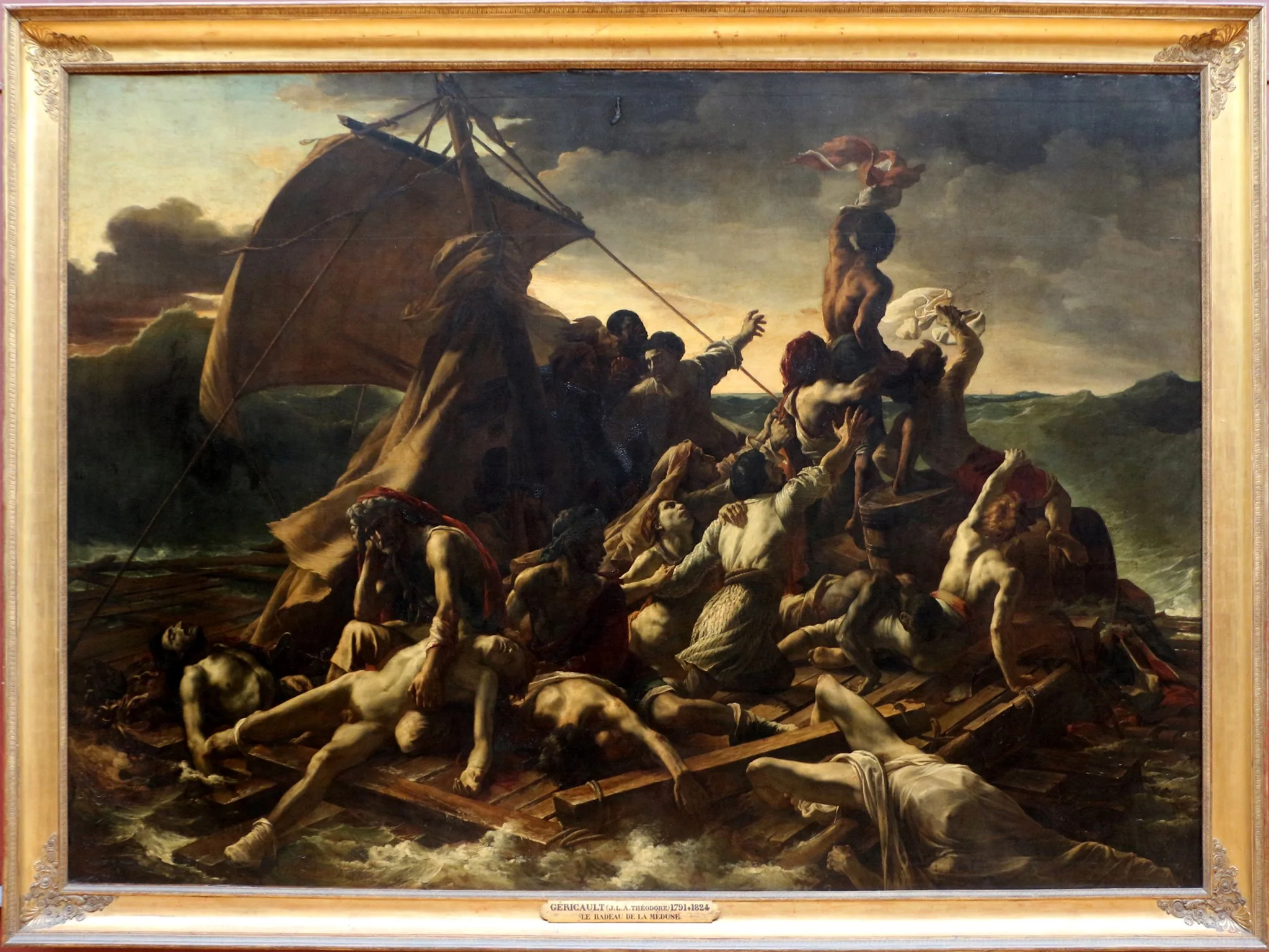
The Raft of the Medusa (1818-1819) by Théodore Géricault, via Wikimedia Common